
Whether you’re reading the latest health news, discussing a recovery plan with a colleague, or explaining how you feel to a doctor, precision matters. Using the right word doesn’t just make you sound more fluent—it ensures you are understood exactly as you intended.
In this guide, we’re going to look at some of the most common (and commonly confused) medical terms so you can communicate with confidence and clarity.
1. The Core Trio: Injury, Disease, and Illness
While these words are often used interchangeably in casual conversation, they actually describe three very different things. Understanding the difference is the first step toward high-level fluency.
Injury
An injury is physical damage caused by an external force, movement, or impact. It’s usually the result of a specific event—like a fall or a sports accident.
- Examples: Broken bones, strained muscles, or bruises.
- How to use it: “He sustained a minor injury at the gym, but he should be back on his feet in a few days.”
Disease
A disease is a biological or physiological condition. It is a specific malfunction in the body often caused by bacteria, viruses, or parasites. Doctors identify diseases through tests and clinical signs.
- Examples: Influenza, cardiovascular disease, or a specific viral strain.
- How to use it: “Medical researchers are conducting trials to find more effective ways to treat the disease.”
Illness
Illness is the subjective experience of being unwell. It describes how you feel and how the condition affects your daily life. You can have a disease (like high blood pressure) without feeling the “illness” yet.
- How to use it: “Coping with a chronic illness requires a lot of patience and a strong support system.”
2. Sophisticated Phrasing for Real Life
To sound more natural in professional or serious contexts, try replacing basic descriptions with these more precise alternatives.
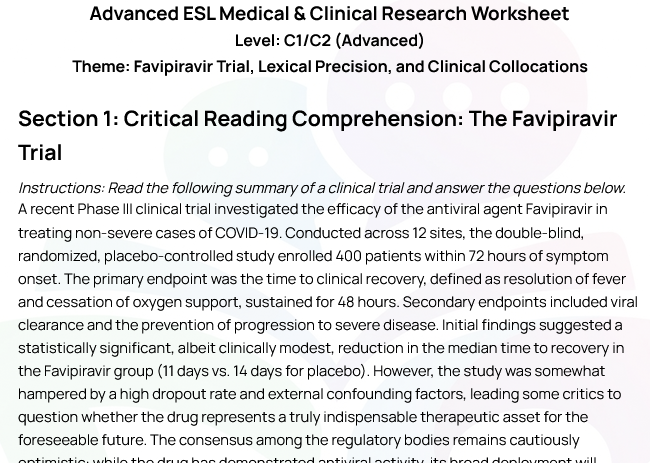
“For the foreseeable future”
Instead of saying “for a long time,” use this phrase to describe a situation that is expected to continue for an indefinite period.
- Example: “The doctor recommended that I continue this treatment for the foreseeable future to ensure a full recovery.”
“Congested”
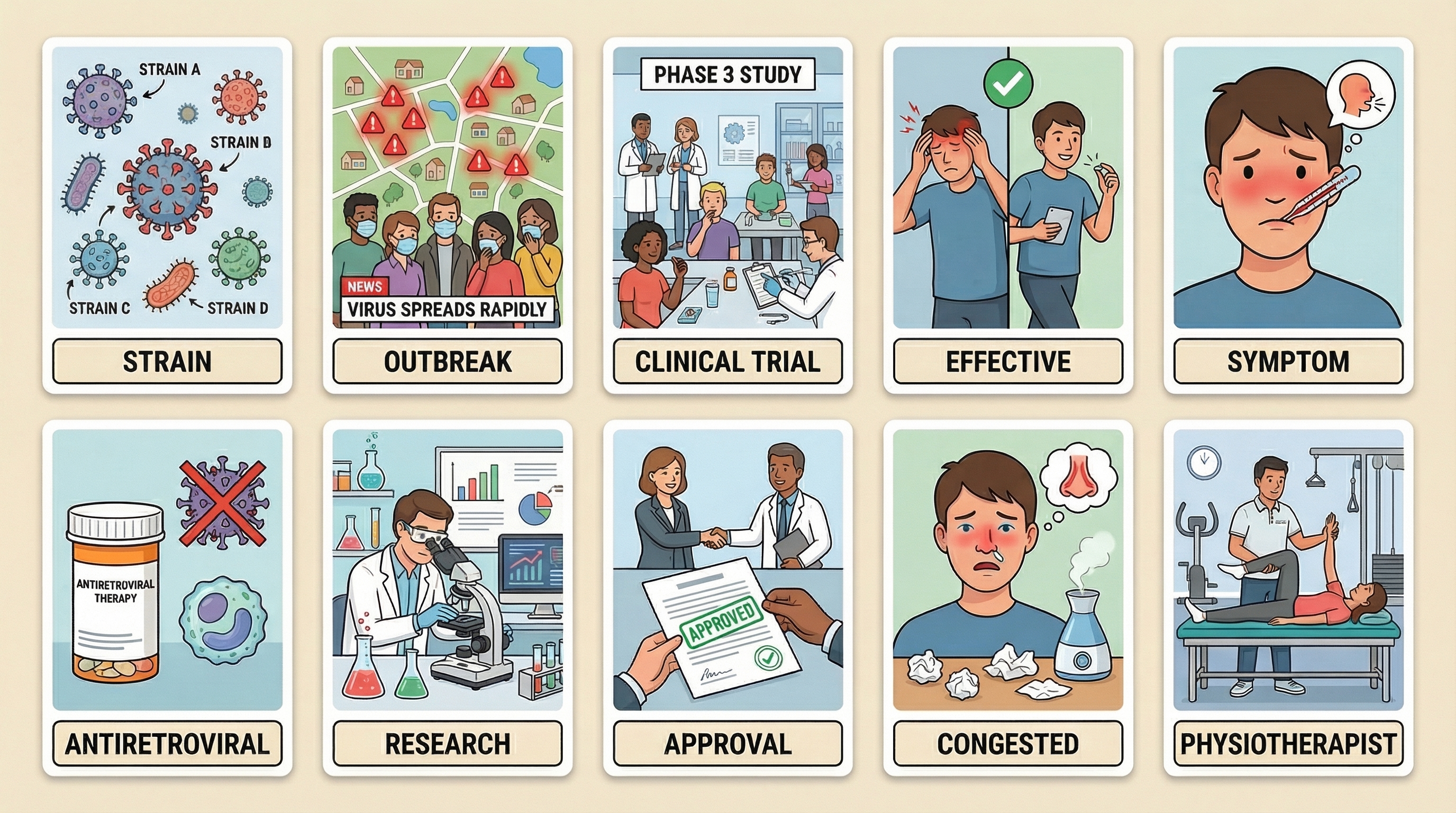
While many people say their nose is “blocked” or “stuffy,” the term congested is the standard, more formal way to describe that feeling of pressure or fluid buildup in the sinuses or lungs.
- Example: “I’ve been feeling quite congested lately, which makes it difficult to sleep through the night.”
3. Commonly Confused Words
Even high-level speakers sometimes stumble on these subtle distinctions. Here are two big ones to watch out for:
Treatment vs. Cure
- A treatment is the process of managing a condition (like taking medicine or going to therapy).
- A cure is the final result when the condition is completely gone.
- The Mistake: You don’t “cure” symptoms; you treat them. You only “cure” the underlying disease.
Progressing vs. Improving
In general English, “progress” is a positive thing. In medicine, it’s often the opposite.
- If a disease is progressing, it means it is spreading or getting worse.
- If a patient is improving, it means they are getting better.
- The Mistake: Never tell a doctor you’re happy that a condition is “progressing”!
4. Key Vocabulary from the News
When you’re keeping up with health headlines (like the ones discussed in our latest video), you’ll often see these terms:
- Outbreak: The sudden start of a disease in a specific area.
- Trial: A scientific test to see if a new medication is effective.
- Outcome: The final result or consequence of a medical procedure or study.
- Research: The detailed investigation scientists do to find new facts or conclusions.
Keep Practicing!
Mastering the language of health is about more than just memorizing a list of words; it’s about understanding the nuance behind them. The next time you’re reading an article or watching the news, keep an eye out for these terms and see how they are used in context.
Your Turn: Can you write a sentence using the phrase “for the foreseeable future” regarding a health goal or a recovery plan? Give it a try—it’s the best way to make the vocabulary stick!
This article is a companion piece to our video lesson: “Japanese flu drug ‘clearly effective’…” – Useful Vocabulary and Phrases. You can watch the full lesson here.

Leave a Reply