
Making a great first impression is one of the most important skills in English. Whether you are starting a new job, joining an English class, or meeting a neighbor, knowing how to introduce yourself clearly and naturally will give you immediate confidence.
In this guide, we will learn how to share who you are and what you love to do in your free time.
1. The Perfect Introduction
A good introduction usually has three parts: your name, where you are from, and what you do (your job or status).
The Basic Phrases
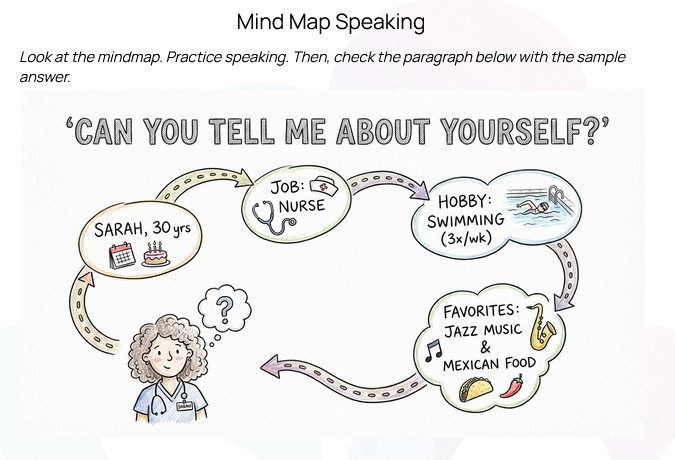
- Name: “Hi, I am Frank.” / “My name is Sarah.”
- Origin: “I am from Spain.” / “I come from Vietnam.”
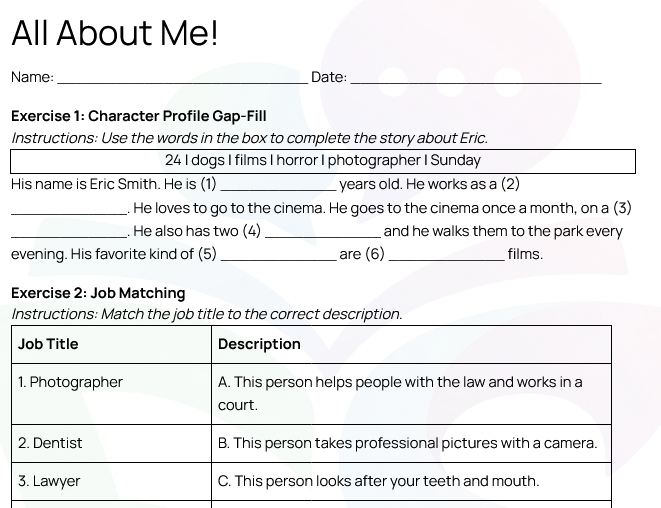
- Job: “I work as a teacher.” / “I am an engineer.”
Note on Jobs: Remember to use “a” before a consonant (a doctor) and “an” before a vowel (an accountant).
2. Talking About Your Hobbies
Once you share the basics, people usually ask, “What do you do for fun?” or “What are your hobbies?”
There are two easy ways to talk about the things you love:
Using “I like…”
- I like + [Verb]ing: “I like cooking Italian food.”
- I like to + [Verb]: “I like to cook Italian food.”
Both are correct! Pick the one that feels easiest for you.
Common Hobbies Vocabulary
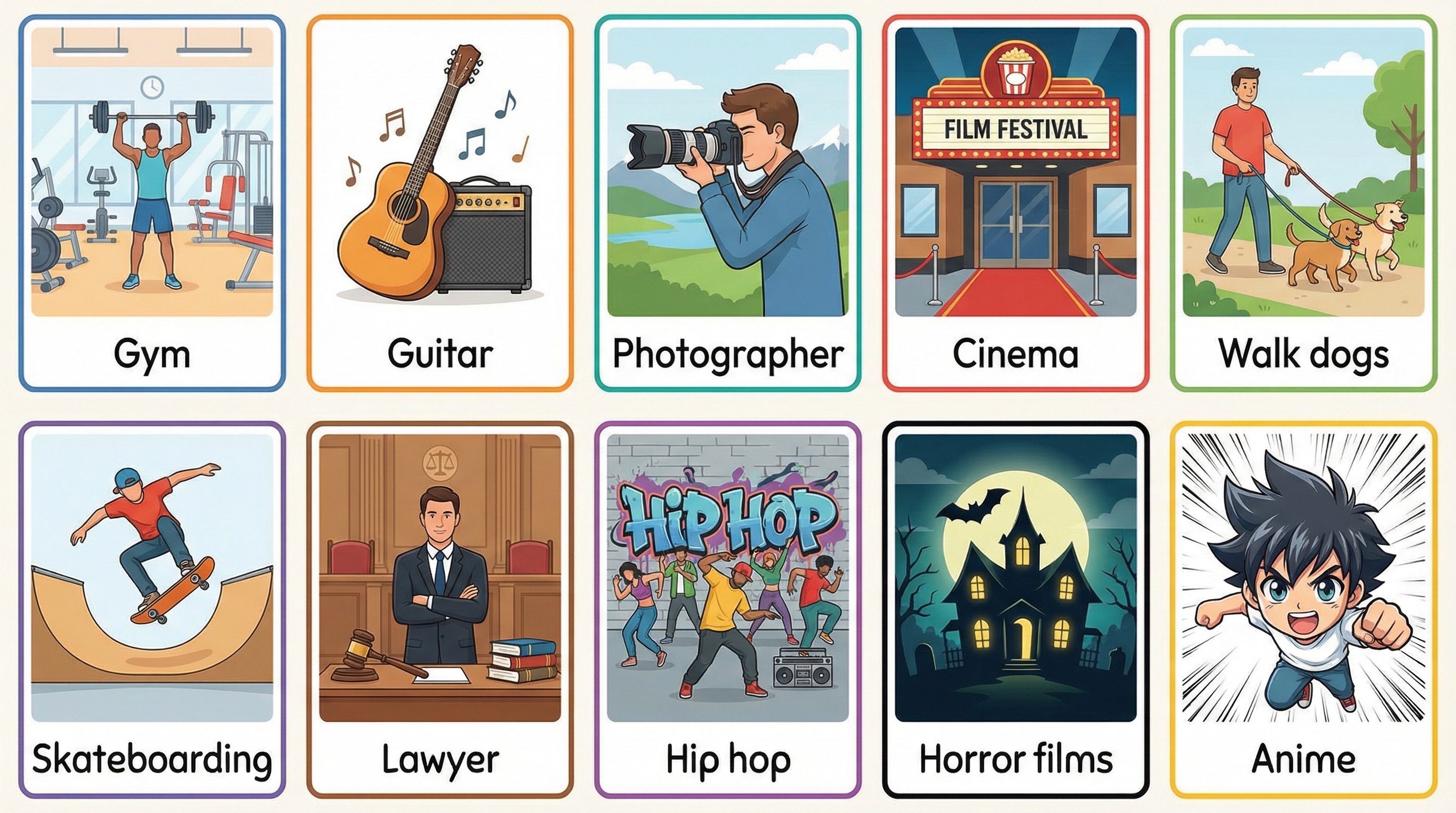
- Going to the gym (e.g., “I go to the gym four times a week.”)
- Playing video games (e.g., “I like playing Overwatch with my friends.”)
- Cooking (e.g., “I love baking lemon cake on the weekend.”)
- Learning a language (e.g., “I am learning Japanese right now.”)
3. Adding Frequency: How Often?
To make your English sound more advanced, explain how often you do your hobbies.
- Every day: “I practice English every day.”
- Once a week: “I go swimming once a week.”
- On [Day]s: “I play football on Saturdays.”
4. Watch Out! Common Mistakes
English can be tricky, but avoiding these two common errors will make you sound much more natural.
The “Third-Person S”
When you talk about yourself, you say “I like.” But when you talk about a friend (He, She, or a Name), you must add an “s”.
- Incorrect: “My friend like to cook.”
- Correct: “My friend likes to cook.”
Wrong Prepositions for Time
Learners often get confused with “in,” “on,” and “at.”
- Use “In” for parts of the day: In the morning, in the afternoon.
- Use “At” for specific times or night: At 7:00 PM, at night.
- Use “On” for days: On Monday, on the weekend.
You’ve Got This!
The best way to learn is to practice. Don’t worry about being perfect—the most important thing is that people understand who you are! Every time you introduce yourself, it gets easier.
Your Turn: Try it in the comments below! Use this template:
“In my free time, I like to…”
“Hi, my name is…”
“I am from…”

Leave a Reply