
One of the first things you need to learn in English is how to talk about time. Whether you are making a doctor’s appointment, meeting a friend for coffee, or checking your work schedule, knowing the Days of the Week is essential.
In this guide, we will break down the seven days, explain the difference between the “work week” and the “weekend,” and even look at the cool history behind these names!
1. The Seven Days of the Week
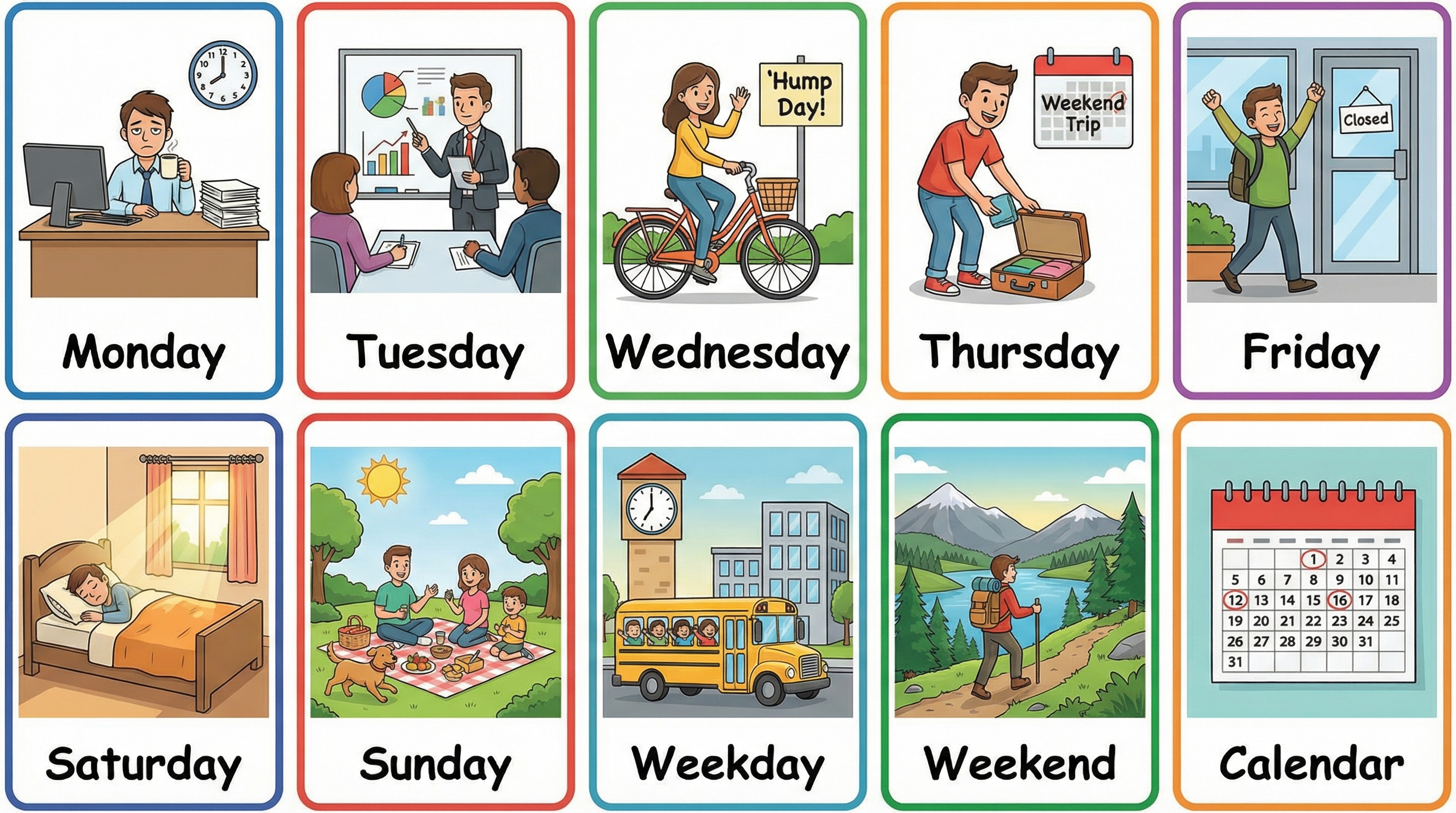
In English-speaking countries, the week usually begins on Monday (for work/school) or Sunday (on many calendars). Here are the seven days in order:
- Monday
- Tuesday
- Wednesday (Pronounced: Wenz-day)
- Thursday
- Friday
- Saturday
- Sunday
2. Weekdays vs. The Weekend
We often divide the week into two parts. Understanding this helps you talk about your routine more naturally.
The Weekdays
These are the days from Monday to Friday. Most people work or go to school during this time.
- Example: “I usually go to the gym on weekdays.”
The Weekend
This consists of Saturday and Sunday. This is the time for rest, hobbies, and family.
- Example: “I love sleeping late on the weekend!”
3. Did You Know? The History of the Names
Most of the days in English are named after Norse (Viking) and Roman gods. Knowing this can help you remember them!
- Tuesday: Named after Tiw, the Norse god of war.
- Wednesday: Named after Woden (Odin), the king of the Norse gods.
- Thursday: Named after Thor, the Norse god of thunder. (Think: Thorsday!)
- Friday: Named after Frigg, the Norse goddess of love.
- Saturday: Named after the Roman god Saturn.
- Sunday & Monday: Simply named after the Sun and the Moon.
4. Grammar Tips: Avoid These Common Mistakes
Even advanced learners sometimes make these small errors. Let’s get them right from the start!
Always Use Capital Letters
In English, days of the week are “Proper Nouns.” This means the first letter must always be a capital letter.
- Incorrect: I have a meeting on monday.
- Correct: I have a meeting on Monday.
Use the Preposition “On”
When we talk about a specific day, we almost always use the word on.
- Correct: “See you on Tuesday!”
- Correct: “What are you doing on Friday?”
Plural Days for Habits
If you do something every week on the same day, add an -s to the end of the day.
- Example: “I have English class on Tuesdays.” (This means every Tuesday).
5. Helpful Phrases for Practice
Try using these sentences today to help you memorize the days:
- “Today is Wednesday.”
- “Tomorrow is Thursday.”
- “Yesterday was Tuesday.”
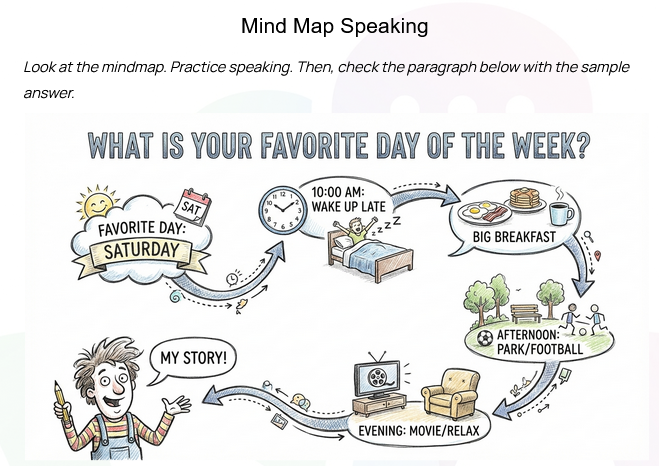
- “My favorite day of the week is Friday!”
Keep Going!
Learning the days of the week is a huge step toward becoming a confident English speaker. Don’t worry if the spelling of “Wednesday” looks a bit strange at first—everyone finds that one tricky! Just keep practicing, and soon it will feel like second nature.
Your Turn: What is your favorite day of the week? Write a sentence in the comments using “on” and a capital letter!

Leave a Reply